

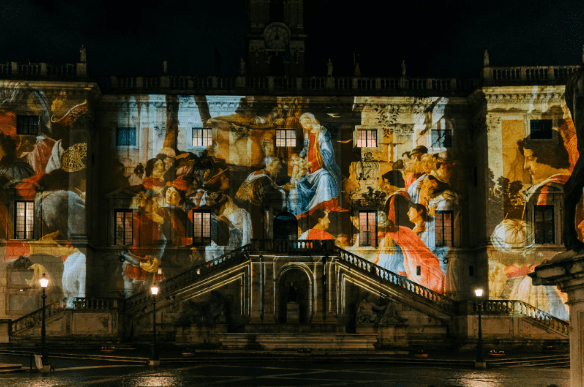
In recent years, the world has witnessed a captivating and innovative form of artistic expression: projection mapping on buildings. This mesmerizing blend of art and technology has become a powerful tool for creators to transform ordinary structures into dynamic canvases, telling stories and evoking emotions in ways previously unimaginable. Yet, as this art form gains popularity, questions arise about its legality. Is projection on buildings legal? In this blog post, we will delve into the legal considerations surrounding projection mapping, exploring the balance between artistic freedom and regulatory compliance.
Beautiful art projection mapped on a building
The Art of Projection Mapping
Projection mapping, also known as spatial augmented reality, involves using projectors to cast images or videos onto three-dimensional surfaces. This technique creates a captivating visual illusion that transforms buildings, sculptures, and even natural landscapes into dynamic and interactive art installations. Artists leverage the unique contours and features of architectural structures to create immersive experiences that engage and captivate audiences.
The Intersection of Art and Law
As with any emerging art form, the legality of projection mapping is only sometimes straightforward. It exists at the intersection of artistic expression, property rights, and local regulations. Artists and creative minds must navigate a complex landscape of legal considerations to ensure their work aligns with existing laws and regulations.
Property Rights and Permissions
One of the central issues surrounding projection mapping is property rights. Buildings, whether public or private, are owned by individuals, organizations, or municipalities. Artists must seek permission from property owners before projecting their artwork onto any structure. This often involves negotiating licensing agreements, securing permits, and establishing terms that protect both the artist’s vision and the property owner’s interests.
Intellectual Property and Copyright
Projection mapping blurs the lines between traditional art forms and technological innovation. When projecting copyrighted material onto buildings, artists must carefully consider intellectual property laws. Using copyrighted imagery, music, or other creative elements without proper authorization could lead to legal disputes. Therefore, artists are encouraged to seek permission or licenses for any copyrighted content they intend to use in their projection mapping projects.
Public Space Regulations
When projection mapping is displayed in public spaces, additional legal considerations come into play. Local regulations and ordinances may dictate the hours during which projections are allowed, the impact on traffic or pedestrian movement, and the potential for disturbances to neighboring properties. Compliance with these regulations is essential to avoid potential fines or legal actions.
Buildings become stunning centerpieces and draw attention with projection mapping
Navigating Legal Challenges
To navigate the legal challenges surrounding projection mapping, artists and event organizers can take several proactive steps:
- Obtain Permissions: Seek written consent from property owners or relevant authorities before projecting onto any building or structure.
- Copyright Compliance: Ensure that all elements of the projection mapping, including images, videos, and music, are either original or properly licensed to avoid copyright infringement.
- Research Local Regulations: Understand the specific regulations governing public spaces and outdoor events in your area. Obtain any necessary permits and adhere to noise, safety, and crowd control guidelines.
- Collaboration with Legal Experts: Consulting with legal professionals specializing in intellectual property, entertainment law, or local regulations can provide valuable insights and guidance.
- Work With Exports: Working with a company specializing in projection mapping can help navigate legal concerns. They are the ones with the expertise and resources to help you. Projection mapping companies can also create custom content to avoid copyright infringement.
Conclusion
Projection mapping on buildings is a remarkable blend of artistry and technology that has the power to captivate and inspire. As this innovative medium gains popularity, it’s crucial for artists and organizers to approach their projects with a thorough understanding of the legal landscape. By obtaining permissions, adhering to copyright laws, and navigating local regulations, creators can ensure that their projection mapping endeavors not only push artistic boundaries but also respect the rights and interests of property owners and the community at large. Ultimately, the legality of projection mapping is a complex matter that requires a harmonious balance between creativity, technology, and the law.
