

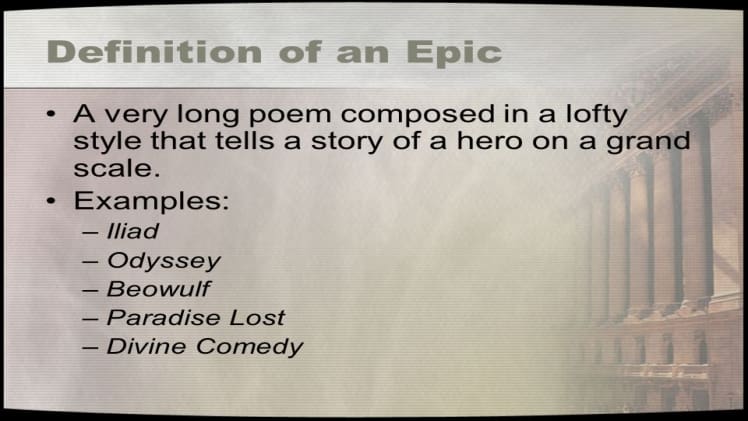
Epic poems are renowned for their distinctive structure and style, which contribute to their grandeur and enduring impact. These literary masterpieces often incorporate various elements that set them apart from other forms of poetry. Here are four key elements that commonly characterize the structure and style of an epic poem:
- Narrative Format: One prominent element of an epic poem is its narrative format. Epic poems typically tell a grand and heroic story, often revolving around a legendary protagonist and their heroic deeds or journey. The narrative unfolds through a series of interconnected events, showcasing the hero’s trials, adventures, and ultimate triumph or resolution. This narrative structure distinguishes epic poems from other poetic forms, which may focus more on personal emotions or abstract themes.
- Elevated Language and Diction: Another crucial aspect of an epic poem’s style is the use of elevated language and diction. Epic poems employ a grand and formal style of writing, often characterized by the use of elaborate metaphors, epic similes, and vivid imagery. The language employed is typically elevated, majestic, and reflective of the heroic and larger-than-life nature of the subject matter. This elevated language and diction heighten the impact of the narrative and contribute to the overall grandeur of the epic poem.
- Invocation of the Muse: Invoking the Muse is a recurring feature in epic poems. The poet often begins the poem by calling upon a divine or supernatural being, such as a Muse or a deity, to inspire and guide their storytelling. This invocation sets the tone for the epic poem, emphasizing its epic nature and highlighting the poet’s reliance on divine inspiration. By invoking the Muse, the poet seeks to establish a connection with the mythic or spiritual realm, adding a layer of reverence and significance to the narrative.
- Cataloguing and Catalogues: Cataloguing, or the inclusion of catalogs, is a characteristic structural element found in many epic poems. Catalogues serve as extensive lists of characters, places, or objects, providing additional depth and context to the narrative. These catalogues may include detailed descriptions of warriors, gods, geographical locations, or even genealogies. Through cataloguing, epic poems create a sense of vastness and completeness, allowing readers to immerse themselves in the richly detailed world of the poem.
Conclusion: The structure and style of an epic poem encompass several distinct elements that contribute to its grandeur and timeless appeal. The narrative format, elevated language and diction, invocation of the Muse, and cataloguing are four key elements commonly found in epic poems. These elements work together to create a unique and captivating experience for readers, immersing them in the heroic and mythic world of the poem. By understanding and appreciating these elements, readers can delve deeper into the richness and significance of epic poetry throughout history.
