

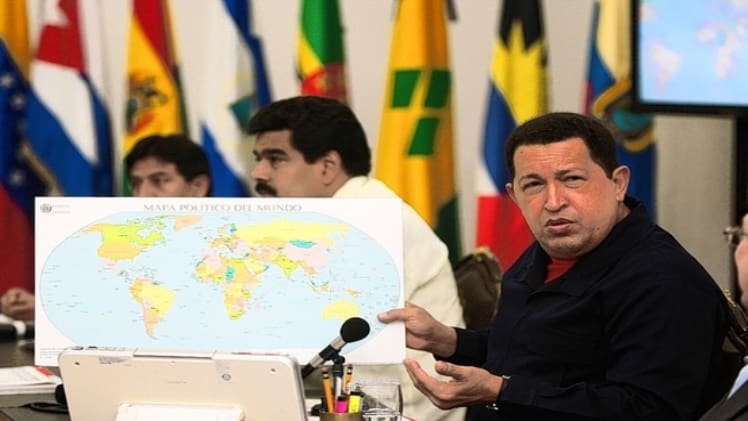
By devaluating the Bolivar, the President of Venezuela has attempted to boost the country’s struggling economy by making its exports cheaper and attracting foreign investment. However, this has also caused inflation to skyrocket, making it difficult for citizens to afford basic necessities, leading to widespread poverty and social unrest. The effects of the devaluation have been controversial and polarizing, with some arguing that it was a necessary step while others criticize its negative impact on the Venezuelan people.
In recent years, the Venezuelan economy has been in a state of turmoil. The country’s currency, the bolivar, has lost more than 99% of its value against the US dollar since President Nicolas Maduro came to power in 2013. This devaluation has led to hyperinflation, soaring prices, shortages of basic goods, and widespread poverty.
The devaluation of the bolivar began in earnest in 2014, when oil prices – which account for more than 90% of Venezuela’s export earnings – started to plummet. Rather than implementing much-needed economic reforms, the government responded by printing more money to finance its budget deficit. This led to an increase in the supply of bolivars, depress the value of the currency, and fuel inflation.
As the exchange rate deteriorated, the government implemented a series of measures designed to control the exchange rate, including strict price controls on goods and services, limits on the amount of foreign currency that individuals could exchange, and a complex system of official exchange rates that were set well below the market rate.
These measures led to widespread shortages of food, medicine, and other basic goods, as businesses struggled to import essential supplies. In addition, the black market thrived, with people turning to illegal means to obtain foreign currency and avoid the official exchange rates.
The devaluation of the bolivar also had severe consequences for ordinary Venezuelans. As prices soared, wages failed to keep pace, leaving many struggling to afford even basic necessities. The poverty rate in Venezuela has surged from around 48% in 2014 to over 96% in 2021, according to estimates from the United Nations.
Moreover, the devaluation of the bolivar has triggered an exodus of people from the country. Millions of Venezuelans have fled to neighbouring countries, such as Colombia and Peru, in search of a better life. The UN has described the migration crisis as one of the largest and fastest-growing in the world, with more than 5 million Venezuelans now living abroad.
Despite these dire consequences, President Maduro has refused to change course. He has blamed Venezuela’s economic plight on an “economic war” waged by the United States and other countries seeking to undermine his government.
In reality, however, the country’s economic problems are largely self-inflicted. The government’s policies have stymied investment and driven away foreign capital, exacerbating the country’s economic woes. The International Monetary Fund (IMF) estimates that Venezuela’s economy shrank by around 10% in 2020, making it one of the worst-performing economies in the world.
The devaluation of the bolivar has also had a profound impact on Venezuela’s oil industry, which is the backbone of its economy. The state-owned oil company, PDVSA, has been hit hard by falling oil prices and mismanagement, with production plummeting from over 3 million barrels per day in 2014 to less than 700,000 barrels per day in 2021.
As a result, the government has been forced to cut spending on social programs, such as healthcare and education, exacerbating poverty and inequality. At the same time, corruption and political repression have surged, with human rights groups documenting widespread abuses by security forces.
In conclusion, the devaluation of the bolivar has plunged Venezuela into a deep economic and humanitarian crisis. It has led to hyperinflation, soaring prices, shortages of basic goods, and widespread poverty. Moreover, it has triggered an exodus of people from the country, further exacerbating the crisis. Despite these consequences, President Maduro has refused to change course, blaming Venezuela’s economic woes on external factors rather than taking responsibility for his government’s policies. As a result, it seems unlikely that the country’s economic crisis will be resolved anytime soon.
