

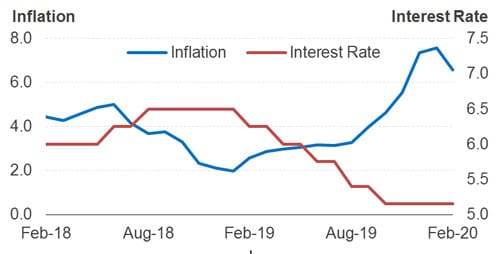
Inflation is the rise in the cost of living over the years. Inflation is either caused by a higher demand for goods than what is available in the market or because of the increase in the costs of the production process. In simple words, inflation is the deterioration of purchasing power of a currency over time. You can calculate inflation using the inflation rate calculator. However, before that, you must understand the different variants of inflation. There are three types of inflation:
- Demand-Pull Inflation
This type of inflation occurs whenever the demand increases for a product faster than an economy’s capacity for manufacturing it. This results in the price rise of the product.
- Cost-Push Inflation
When the production costs grow faster than the price of goods and services, it results in a phenomenon called cost-push inflation.
- Built-in inflation
Production cost rises as workers demand higher wages, resulting in built-in inflation.
The impact of inflation
Inflation erodes the purchasing power of your money, meaning you don’t have purchasing power either, resulting in a fall in the value of your assets. Inflation also adversely affects the economic growth of a country. Inflation hurts businesses relying on discretionary spending. Apart from that, inflation affects mutual fund investments too. Fixed-income securities may fail to keep up with the inflation rate, probably resulting in diminished returns.
What are the strategies to safeguard one’s wealth?
An online inflation calculator in India can provide insight into the inflation rate and the future value of your savings. Apart from an inflation calculator. There are other strategies for fortifying your wealth. Let’s explore some of these effective strategies.
- Diversifying investments
Create a portfolio of diversified investments consisting of a wide range of asset classes like mutual funds, bonds, stocks, commodities, and real estate. Different asset classes react differently to inflation, which may ensure portfolio resilience.
- Revisit your strategy
Regularly reassess your investment strategy and accordingly adapt to evolving economic conditions. Be aware of the market fluctuations, and inflation trends and adjust your investment strategies and allocations based on that.
- Educate yourself
Keep yourself informed about different economic trends, investment opportunities, and financial strategies. Grow your understanding of inflation’s implications on your finances. Staying updated can help you make well-informed financial decisions.
- Invest regularly
It is imperative to develop the habit of saving and investing regularly. Do so even during low inflation. Create an emergency fund for weathering unexpected financial storms. Implement a long-term perspective focusing on maintaining your purchasing power and building wealth steadily over time.
- Seek guidance
Consult regularly with financial advisors who are experts in inflation hedging and wealth management. These advisors provide personalised insights, a comprehensive analysis of your financial situation, and customised strategies. However, always make sure to approach a certified financial expert.
Conclusion
To protect yourself against the effects of inflation, consider hedging strategies such as investing in real estate, commodities, or mutual funds. Diversifying your investments might also reduce the risk of any asset class being affected by inflation. Use an inflation calculator if you want further help.
