

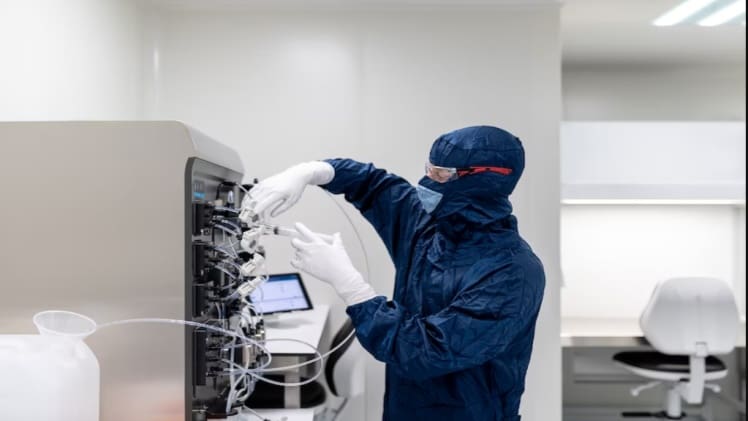
In the pursuit of scientific knowledge and breakthrough discoveries, researchers often turn to ultra-clean environments to eliminate contaminants that can interfere with their experiments. These controlled spaces provide an essential platform for studying delicate materials, developing advanced technologies, and unlocking the mysteries of the universe.
According to a report by Precedence Research, there has been a notable rise in the adoption of cleanroom technology in various industries, driven by the growing recognition of the importance of maintaining clean and controlled environments. The global market for cleanroom technology was valued at approximately $3.9 billion in 2022 and is anticipated to reach around $6.96 billion by 2032. This represents a compound annual growth rate of 5.97% during the forecast period from 2023 to 2032.
In this post, we’ll delve into the intriguing realm of cleanroom settings and the pursuit of scientific breakthroughs.
Ultra-Clean Environments
Ultra-clean environments play a pivotal role in scientific research, particularly in fields like nanotechnology, semiconductor manufacturing, and space exploration. By minimizing the presence of particles, gases, and electromagnetic interference, researchers can create stable and controlled conditions for their experiments in a clean room environment. This level of cleanliness is crucial for achieving accurate and reproducible results.
According to American Cleanroom Systems, these spaces are equipped with specialized filters, air handling systems, and stringent protocols to maintain the desired cleanliness levels. These environments protect sensitive materials, enhance the precision of measurements, and enable scientists to study the smallest particles and phenomena with unprecedented accuracy.
Applications in Nanotechnology
Nanoscience and nanotechnology heavily rely on ultra-clean environments for their research and development. In these spaces, scientists can manipulate and analyze matter at the atomic and molecular scale. Cleanrooms provide the necessary conditions to fabricate nanoscale structures, such as quantum dots and nanowires, with high precision.
According to AZoNano, the High-Efficiency Particulate Air (HEPA) filtration system is an essential component in maintaining cleanrooms. It effectively captures particles larger than 0.3 μm in size, thereby ensuring the purification of air entering the cleanroom and eliminating the majority of airborne contaminants.
To further minimize the accumulation of contaminants, stringent protocols are implemented to enforce strict standards for washing and dressing, preventing external sources of contamination from entering the controlled environment.
Cleanrooms also prevent contamination that could affect the performance of nanoscale devices. Through the use of cleanroom environments, researchers can push the boundaries of nanotechnology, leading to advancements in electronics, medicine, energy, and materials science.
Enabling Semiconductor Manufacturing
Cleanrooms play a vital role in the semiconductor industry as they are essential for minimizing the presence of dust, airborne contaminants, and electrostatic discharge that could potentially harm delicate microelectronic components.
According to an article published by TurboFuture, even a small particle of dust falling onto a semiconductor chip can have severe consequences, resulting in significant financial losses. This is why semiconductor manufacturers heavily depend on cleanrooms to ensure the production of integrated circuits and microchips with excellent yields and minimal defects.
The stringent cleanliness standards ensure the reliability and performance of the final products. Moreover, ultra-clean conditions are necessary for advanced lithography techniques, such as extreme ultraviolet (EUV) lithography, which enables the production of smaller and more powerful microchips.
Exploring the Frontiers of Space
When it comes to space exploration, ultra-clean environments are vital for the assembly, testing, and integration of spacecraft and their sensitive instruments. Cleanrooms help protect delicate optics, sensors, and electronics from contamination that could impair their functionality in the harsh conditions of space.
Furthermore, the extreme cleanliness ensures that any findings or data collected from space missions are accurate and free from terrestrial contaminants. Cleanrooms also enable scientists to study extraterrestrial materials, such as moon rocks and meteorites, without the risk of contamination from Earth.
Advancements in Fundamental Physics
Cleanroom environments are of great significance in fundamental physics research. In fields like particle physics and quantum mechanics, experiments demand an environment free from external disturbances.
These controlled spaces shield sensitive detectors and instruments from background noise, electromagnetic interference, and cosmic rays, enabling precise measurements and observations.
For example, underground laboratories with ultra-clean conditions are used to detect rare interactions, such as dark matter or neutrino interactions. By achieving higher purity and lower noise levels, scientists can unravel the mysteries of the universe and gain insights into the fundamental building blocks of matter.
Future Prospects and Technological Innovations
As the quest for scientific discoveries continues, the demand for ultra-clean environments will persist and drive further technological advancements. Researchers are developing innovative methods to achieve higher levels of cleanliness and reduce contamination risks. The integration of robotics, advanced materials, and miniaturized equipment will enhance the efficiency and reliability of cleanrooms.
Additionally, the emergence of cleanroom-on-a-chip technologies holds promise for creating portable and cost-effective clean environments for field research. These advancements will enable scientists to explore new frontiers, make groundbreaking discoveries, and propel humanity toward a future of innovation and understanding.
Final Thoughts
The realm of ultra-clean surroundings is a critical basis for scientific discoveries and developments in a variety of sectors. The importance of cleanroom technology cannot be emphasized, from nanotechnology to semiconductor production, space exploration to fundamental physics research.
The ongoing adoption of cleanroom procedures, as well as the expanding market demand, demonstrate an understanding of the critical role that highly controlled environments play in generating precise and consistent outcomes.
The hunt for ultra-clean surroundings will continue as researchers push the frontiers of knowledge and develop creative technologies, leading to greater improvements, breakthroughs, and a better grasp of the inner workings of our cosmos.
